
“I’m not here to propose a new access-control system. I’m here to remove three.”
Crowning RAJ: How Resource Access JWTs Refactor Authorization Joyfully
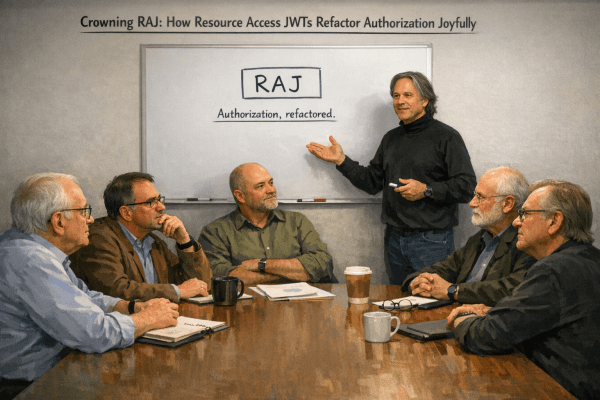
“I’m not here to propose a new access-control system. I’m here to remove three.”

What is remarkable is not that art begins there, but that it sometimes manages to escape…
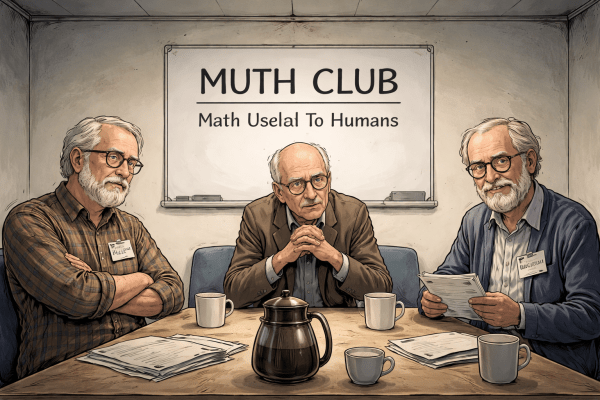
Arithmetic that doesn’t terminate is not mathematics. / It’s wishful thinking with symbols…

Power scales poorly. Coherence scales quietly.

“What’s missing is the thing we had for structured data. But for… all of this.”

Deno wins only if Node becomes unsustainable in a specific context — untrusted, user-supplied code running in multi-tenant environments — before imitation arrives.

And adaptation is not a complication. / It is a different category…

MSRP: Replace spacetime + Markov dynamics with something simpler that still predicts everything.

In Laws of Form, I began with the mark: the act of drawing a distinction. / Yet the mark itself presupposes something deeper-- a prior domain in which no geometry is given. / Here I present a successor: The Laws of Formless, a calculus that precedes the making of form…

Alright, you clowns. You've spent a hundred years polishing spacetime like it's some sacred crystal. Minkowski this, Markov that. But nature—real, messy, experimental nature—keeps coughing up data that doesn't fit your pretty, memoryless picture…


You must be logged in to post a comment.