Syscalls for Agents: How microcontexts make agents cheaper, safer, and wiser — faster.

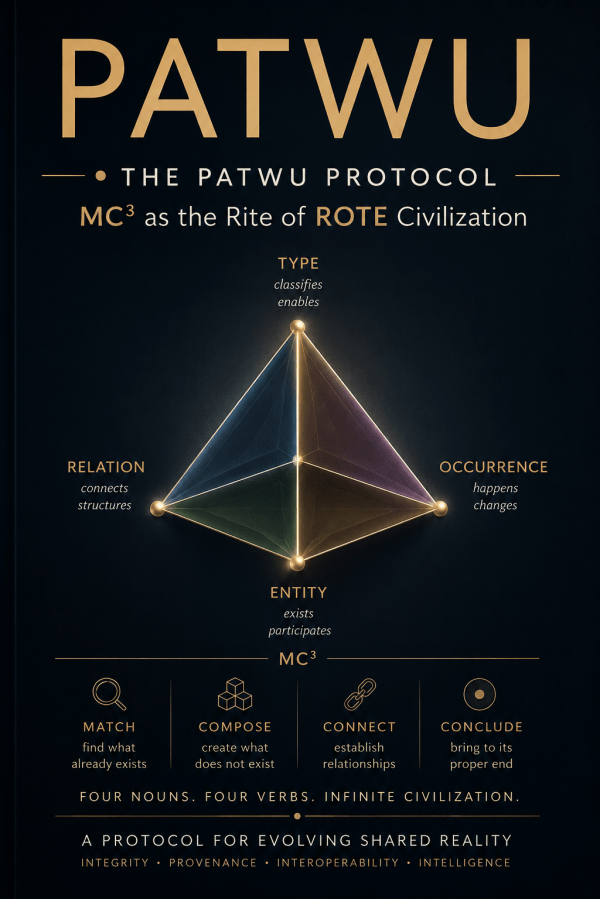
Agents need the same invention: an admission-controlled boundary between an untrusted interior and everything that matters. The unit that makes the boundary workable is the microcontext — the smallest independently addressed, typed, provenance-tagged piece of state an agent consumes or emits. Boundary, atom, and one further discipline about how atoms compose: that is the whole architecture.

Agentless Agentic Systems: How MUSE Acts Compose Wisely.

The usual abstraction for an AI system with initiative is the Agent. An Agent is given a name, a role, a model, memory, tools, credentials, permissions, perhaps a budget, and enough persistence to pursue a goal over time. This is convenient as a programming abstraction. It is a poor protection abstraction.

Revenge of the Data Mesh: AI and the Fourth Epoch of Data Management

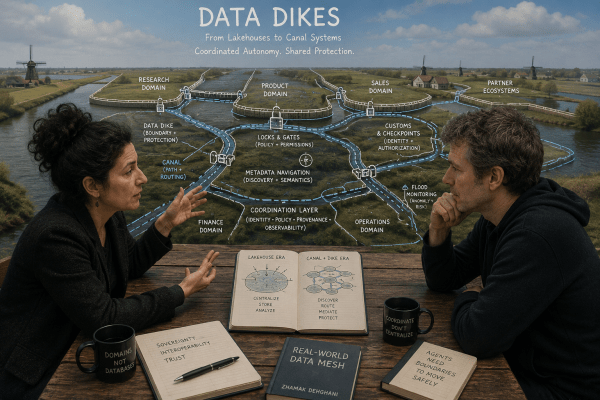
The history of enterprise data management is a recurring cycle of centralization and decentralization. Each epoch begins when organizations face an explosion of complexity that local teams cannot coordinate on their own. A new centralized architecture emerges to solve the problem. Over time, however, the very mechanisms that enabled coordination become bottlenecks to innovation. The cycle then repeats at a higher level of abstraction.

Blog at WordPress.com.

Up ↑