As societal challenges grow in complexity, our existing institutions—rigid, hierarchical, and often outdated—struggle to keep pace. To address these shortcomings, IAL can spearhead the creation of new "disruptive" institutions through a meticulously crafted design process that emphasizes innovation, adaptability, and inclusivity.
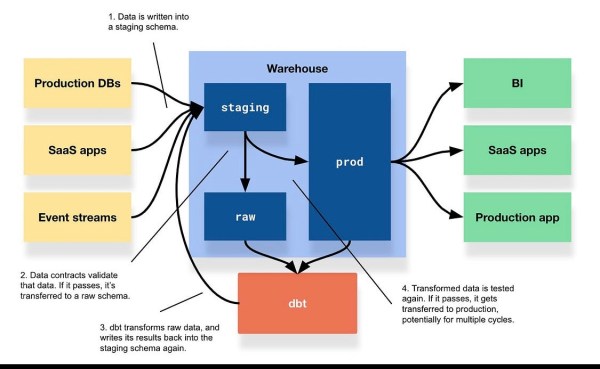
Beyond (Data) Contracts: A Response to Benn Stancil
The profound truth here is that we cannot control other people. We can only honestly and gracefully fail, if we are not getting what we need to succeed.
Story: Molly’s Life Thesis
Molly had been sorely tempted to play it safe. Tell the Elders a story that would inspire them to keep her there. Play on their sympathy. Misrepresent what she was capable of. She tried to make herself fit in. She really tried. But she just couldn't do it.
Pitch: Data is a Feature, not a Product
In this provocative talk Dr. Ernest N. Prabhakar, former Open Source Product Manager at Apple, argues that is time for our industry to reorganize around "decisions" rather than "data."
Being Human: A Curriculum
Reframing spirituality as the culturally-neutral, teachable practice of becoming more human, as expressed in: 3 Capabilities4 Attributes per CapabilityPrerequisiteTaskTechniqueMindset12 Learning Outcomes Inspired by the Minerva Baccalaureate, especially their focus on Content over Context. A. Connecting (cosmos) #wonder#identification#formation#universalizing B. Individuating (pneumos) #agency#antifragility#reflection#specializing C. Advancing (logos) #inspiration#intervention#reformation#normalizing CapabilityTriggerSkillProcessValueConnectWonderIdentificationFormationUniversalIndividuateAgencyAntifragilityReflectionSpecialAdvanceInspirationInterventionReformationNormalTriastic Humanity
Third Millennium Values
I deeply appreciate and respect the new focus and push for 21st-century learning outcomes. I just don't think they go far enough. Here are the four core character traits that I believe are foundational to creating those outcomes, as well as healthier individuals, communities, and society. Agency: I choose to take responsibility for what happens... Continue Reading →
How to Fund Growth
Most organizations' financial structures are designed for predictability rather than explosive growth. To change that, we must: Invest Constructively in Passion Specifically: 1. Align Incentives Learn what people deeply want. Articulate how they can pursue that by contributing to the organization's mission 2. Unleash Talent Learn where people are the happiest and most productive. Build support systems that allow them to maximize... Continue Reading →
TBC 4: The Process for Products
One of the key insights about entrepreneurship in the last decade is that a startup is not just a small version of a established business. Rather, a startup is an organization formed to search for a business model, rather than execute one.
In particular, this implies that startups should be designed to maximize learning by exploiting surprises. This is the exact opposite of a traditional business, which attempts to increase predictability by avoiding surprises.
To get the optimal structure, we need to be clear on:
Which things we need to learn (the problem)
How we are going to learn them (the process)
Who will own the learning (the people)
What will prove we have learned the right lessons (the product)

Triversity: How Preschool + Entrepreneurship Will Disrupt University
So far, 2013 is largely living up to the hype as a "tipping point" for education reform. Conversations around disruption, blending, and mastery are becoming mainstream. At long last, it seems like every aspect of the educational is being reexamined and redesigned by someone. There is more opportunities for funding and innovation than ever before. Not... Continue Reading →
Can Startup Thinking Solve the Innovator’s Dilemma?
When I discussed theories about how and whether Apple has solved the Innovator's Dilemma, I neglected to mention my favorite theory: Institutionalizing Startup Thinking (IST) Apple has solved the Innovator's Dilemma by institutionalizing startup thinking. This is characterized brilliantly by an Andreessen Horowitz post on Why We Prefer Founding CEOs: The technology business is fundamentally the innovation... Continue Reading →